How to Improve Your LinkedIn Profile to Increase Connection Acceptance Rates
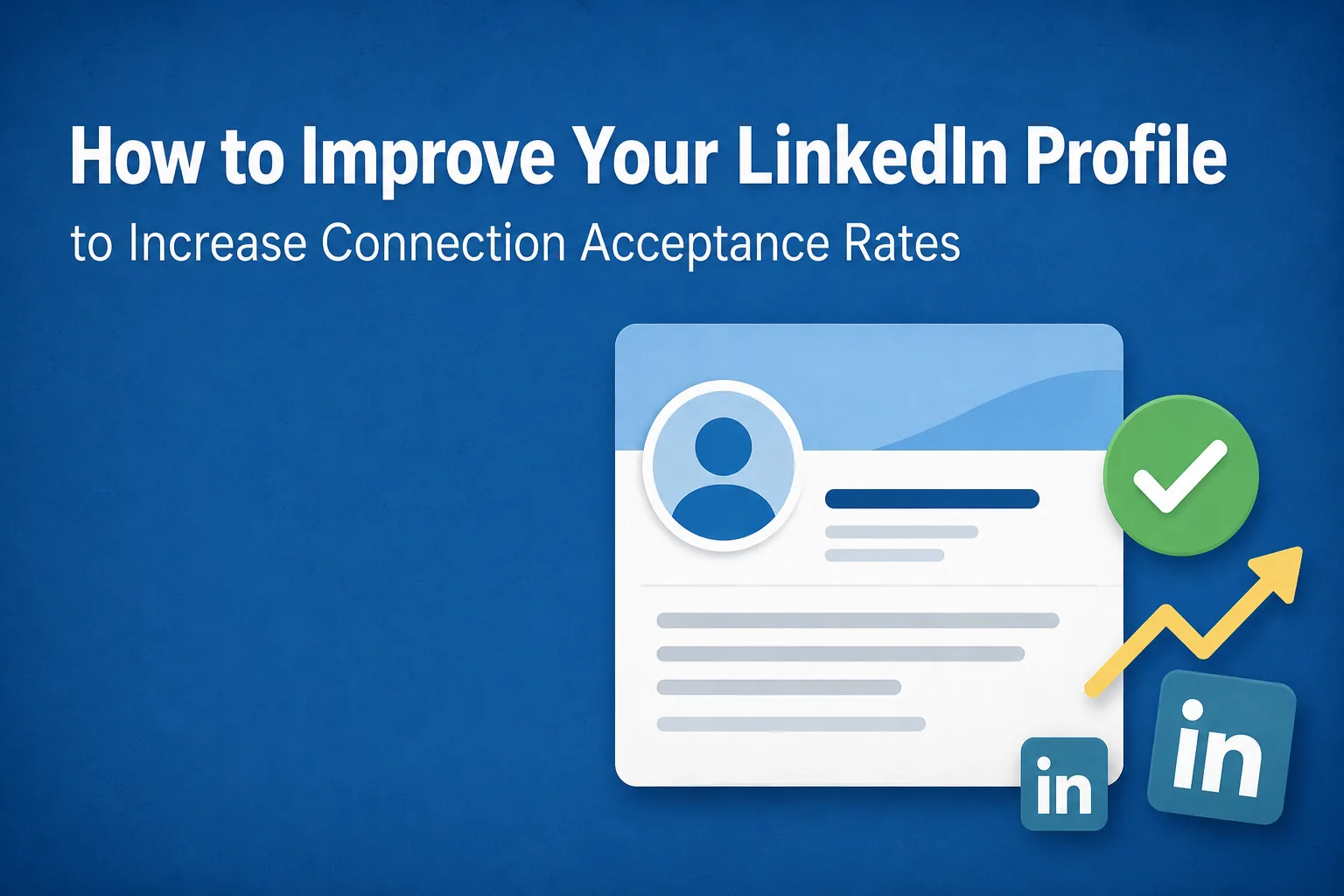
If your LinkedIn connection requests get ignored, the issue often begins before your message is even read. Most people decide whether to accept you in three seconds based on your profile and your headline. Your profile builds the trust that makes someone feel comfortable opening a conversation with you. When that trust is missing, they decline your request without thinking.
This guide explains how to optimise your LinkedIn profile so more people accept your LinkedIn connection message and reply to your LinkedIn messages.
Your Profile Is the First Filter People Use
When a connection request arrives, almost everyone scans four things before deciding whether to accept:
- Your photo
- Your headline
- Your mutual connections
- Your LinkedIn connection message, if included
If anything feels unclear or low credibility, the request gets ignored.
A strong profile tells the reader:
- This person looks credible
- This person understands my world
- This conversation will be useful
That is the goal: not perfection, not a polished biography, just trust.
Step One: Fix Your Headline for Clarity and Credibility
Your headline carries most of the weight. It is the only text they see before opening your profile.
A weak headline looks like this:
- Founder at Company
- Sales Professional
- Helping businesses grow
None of these communicate seniority or value. They are too vague.
A strong headline shows:
- Your seniority
- Your domain
- Your target audience
- Your value
Examples:
- Founder working with consulting firms on outbound performance
- Commercial lead helping B2B teams increase early stage replies
- Advisor supporting founders who need predictable intro meetings
Each one is clear, specific and relevant, which is what earns acceptance.
Step Two: Use a Professional Photo
People make trust judgments instantly. A friendly, professional photo meaningfully increases acceptance rates.
Avoid:
- Vacation photos
- Low resolution images
- Unclear backgrounds
- Distracting angles
Choose a clean, well lit photo that feels warm and confident.
It seems small, but it changes how people perceive your entire message.
Step Three: Rewrite Your About Section to Speak to Your Audience
Most About sections are autobiographies. Prospects do not care about that. They care about what you can help them with.
Rewrite your About section using these principles:
- One short paragraph
- Speak directly to your target audience
- Explain what you help people achieve
- Remove jargon
- Keep it conversational
Example:
I work with commercial teams and founders who want more predictable intro meetings from their outbound on LinkedIn. My focus is message quality, personalisation and creating warm conversations at scale. If you want to improve reply rates or tighten your outbound workflow, feel free to reach out.
Short, clear and relevant is all you need.
Step Four: Pin Content That Shows Expertise
You only need one piece of proof to increase credibility, ideally something that signals you know what you are talking about.
For example:
- An article
- A client result
- A breakdown of outbound best practices
- A short insight thread
Pinned content instantly changes how people perceive your LinkedIn connection message because it shows thought leadership.
Step Five: Clean Up Your Experience Section
Your experience does not need to be long. It needs to be obvious.
Simplify everything. Remove anything unrelated to the audience you are targeting.
Focus on:
- Your role
- Your outcomes
- Your impact
This is where people subconsciously decide whether you are senior enough to be taken seriously.
Step Six: Align Your Profile With Your Outreach
If your LinkedIn message says one thing but your profile says something different, trust breaks.
For example:
- Messaging commercial teams but your profile looks targeted at job seekers
- Talking about outbound strategy but your profile does not show any experience
- Pitching a premium service while your profile looks empty
Everything must align:
- Your headline
- Your About section
- Your pinned content
- Your recent activity
The clearer this alignment is, the higher your acceptance rate climbs. It also helps to make sure you are targeting the right people in the first place.
Step Seven: Avoid Common Profile Mistakes
These mistakes lower acceptance rates instantly:
- Using a sales heavy headline
- Using a generic value statement
- Writing long paragraphs
- Posting irrelevant personal content
- Having a profile with no activity
- Leaving About and Experience empty
People want to connect with someone who feels real and credible, not someone who looks automated or unfocused.
FAQs About Improving LinkedIn Acceptance Rates
What is a good acceptance rate?
Anything above thirty percent is solid. Anything above fifty percent is strong.
Does my headline really matter?
More than anything else on your profile. It decides whether people even open your profile.
Should I send a LinkedIn connection message or keep it blank?
Blank requests usually perform better unless your request is highly personalised and relevant.
Does activity level matter?
Yes. A profile with no activity looks inactive or low trust.
Final Thoughts
Your LinkedIn profile is not a formality. It is an asset that determines whether people want to talk to you.
When your profile is clear, credible and aligned with your outreach, acceptance rates rise immediately. When people trust you at first glance, they reply more often, connect more willingly and engage more openly.
If your outreach feels ignored, improving your profile is one of the fastest ways to fix it.